

3 August 2026, a day I will never forget
During this journey of mine through Salento England, here in Oxfordshire, very strange things have always happened. Sometimes events that I still struggle to explain, other times coincidences that seem almost impossible.
I am currently working 24/7, as many of you know, on a project called Puglia. Or Apulia.
Of course, I am talking about my Region, that land in the extreme south-east of Italy.
But in 2022, when I had around 600 digital jewels, I was also working on a project dedicated to Salento, my homeland within that same Apulia, with Lecce as its capital. Lecce, the city I always call “the last city of Italy” when I talk about my land to the people I meet here in England.
What can I say.
For different reasons, I later lost all those digital jewels.
And I had to start again from zero.
I will talk about that story too, in other sections, sometime in the future.
Because many of you know only part of what actually happened.
The complete truth, however, I have not told yet.
Once again, I found myself searching for digital diamonds.
During this 2026, I have recovered many of the ones I had lost, but the one connected to Salento was still somewhere in the depths of the web.
Some other shark had taken it.
3 August 2026
Then 3 August 2026 arrives.
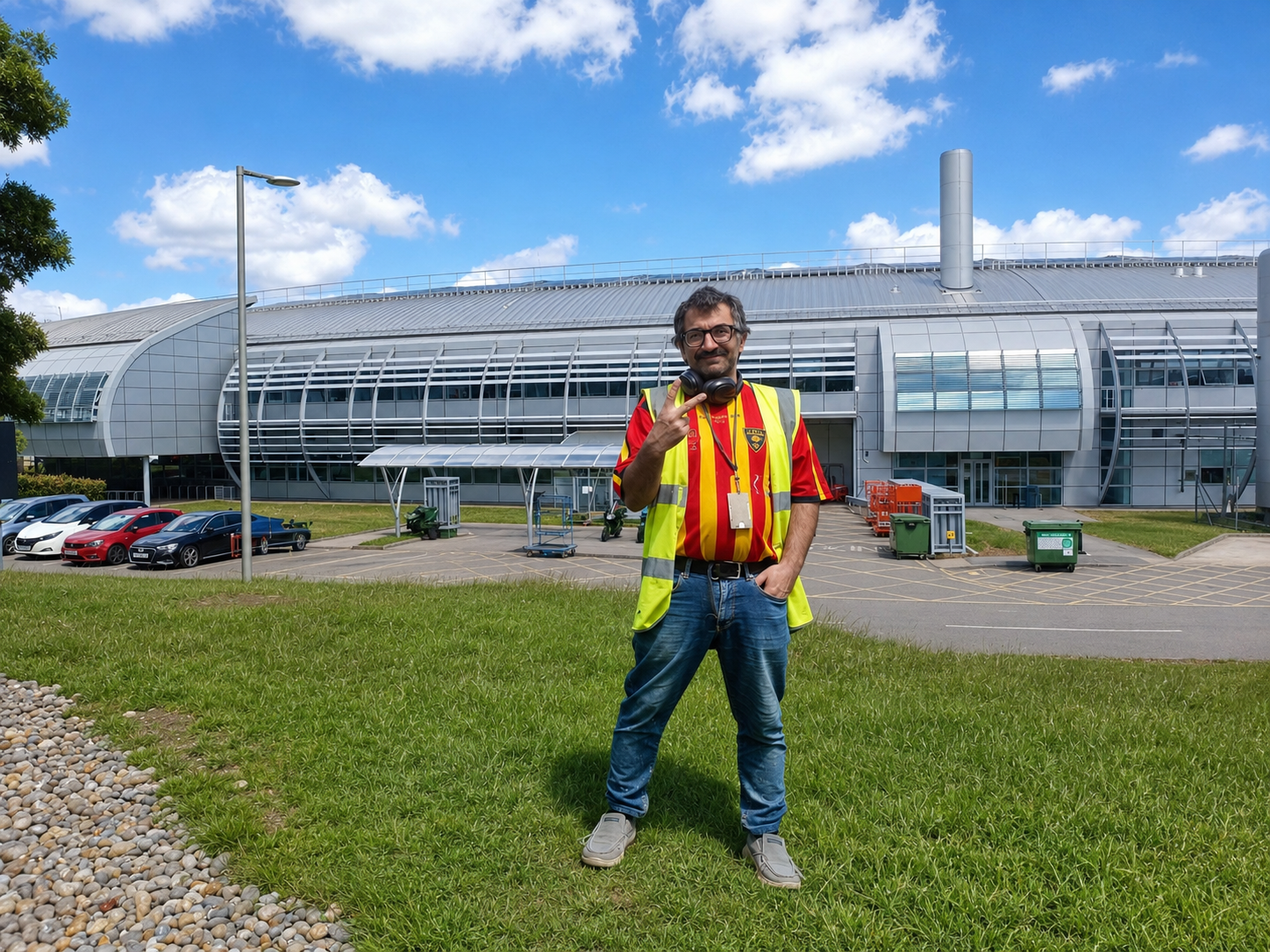
I am at work at Harwell Campus.
During my break, I take a few minutes and open the personal computer that I carry practically everywhere with me.
That day I was in the restaurant area at Harwell, very close to the Diamond Light Source, one of the most impressive scientific facilities on the Campus.
I was sitting alone at a table in the outdoor garden.
I was eating strange things, but strangely good things.
Around me were people from practically every part of the world.
Researchers.
Scientists.
Physicists.
Engineers.
Aerospace engineers.
Astrophysicists.
Experts in satellites, space, energy, medicine, materials and quantum technologies.
People who probably work every day on problems that I would struggle even to understand.
Crazy brains.
Maybe there was a future Nobel Prize winner sitting in front of me.
Maybe a millionaire.
Maybe a billionaire.
Or maybe simply completely normal people capable of doing extraordinary things.
I don’t know.
I didn’t know who they were.
I only knew that I was sitting there, surrounded by people who had arrived from so many different parts of the world, just a short distance from the Diamond Light Source, inside one of the most scientifically incredible places I have ever experienced.
And right at that moment, something even stranger happens.
My brain decides to leave planet Earth completely.
I don’t know why.
I don’t know why at that exact moment.
But my brain — or perhaps my mind — tells me to run a search.
I open the computer.
I search.
One minute.
Just one minute.
And in front of my eyes I see something that, for a few seconds, I can hardly believe.
That digital diamond was available again.
The shark had disappeared.
He had released it.
After years, it was there again.
Right in front of me.
At that moment: 100% concentration.
Mind-blowing (allucinante) emotion.
My hands begin to shake.
I immediately begin the operation to reclaim my digital diamond.
An operation that would normally take perhaps thirty seconds.
Instead, I took seven, maybe eight minutes.
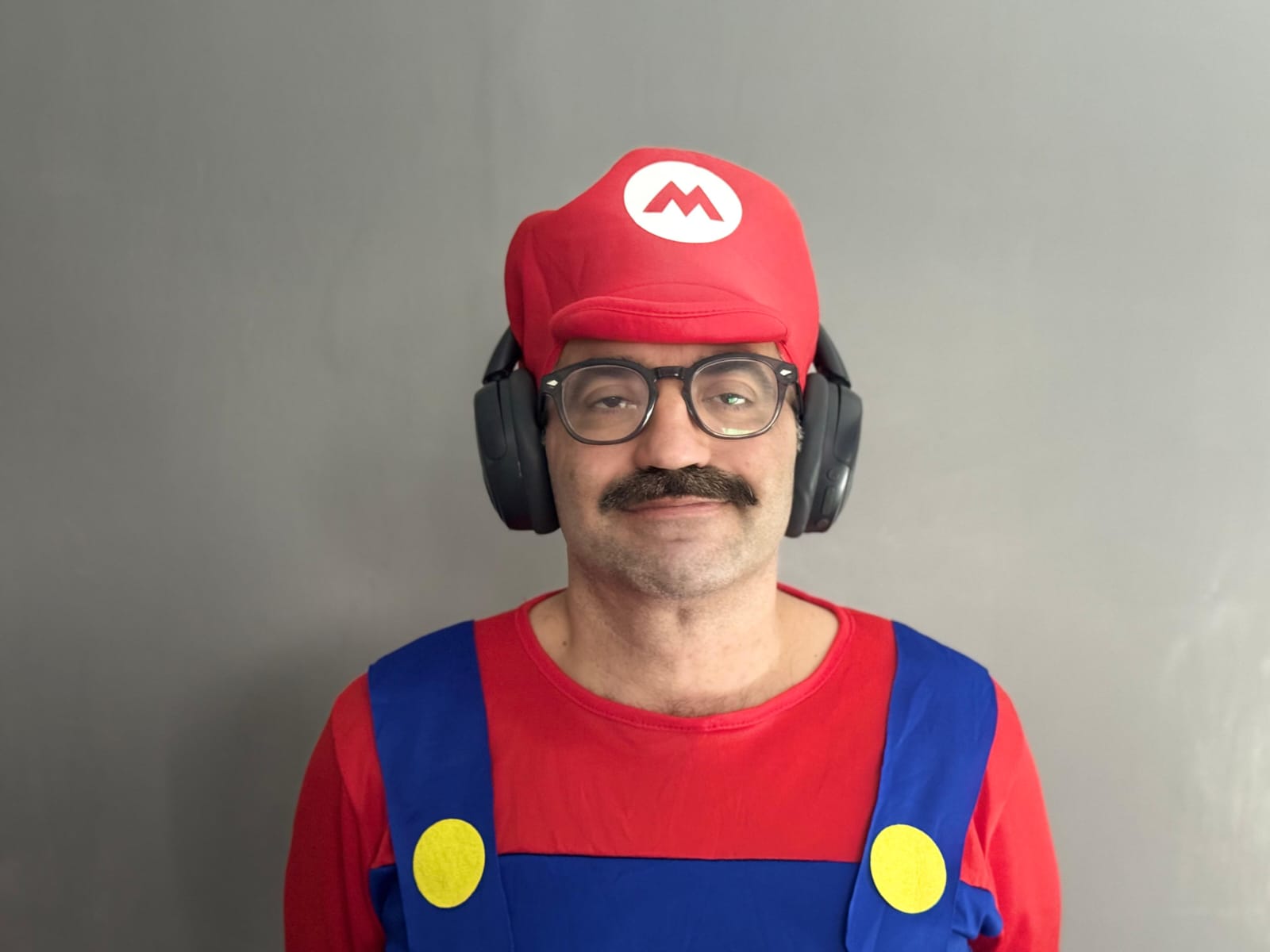
For those eight minutes, I transformed.
From Super Mario Groundworker into Super Mario, conqueror of digital diamonds.
And when I transform, to be honest, I am a little afraid.
Because even Super Mario, the real one, does not win every challenge.
He does not overcome every obstacle.
And above all, he does not always reach the final level.
So I check everything.
I check it again.
One more time.
I absolutely do not want to make a mistake.
My hands are shaking.
My head is vibrating.
I am completely charged with energy.
My level of concentration is so high that for a few seconds I think even my computer might explode.
I only have to complete the operation.
One final step.
One final check.
And in the end…
I did it.
Fantastic.
Mission completed.
The digital diamond was mine again.
At that point, I returned to planet Earth.
I calmly finished my meal — those strange things that, in the end, were actually very good — and a few minutes later I was back to being what I had been before.
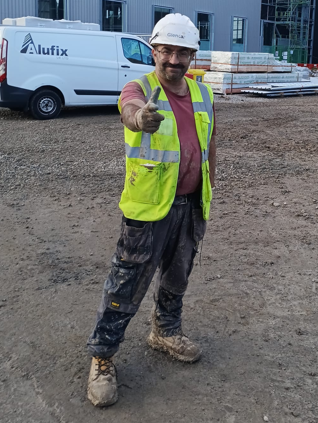
Super Mario Groundworker.
Ready to go back to my job.
Doing demolition work.
Doing the muck away — my “Conza” (Conza = muck / muck away).
Picking up what needs to be picked up, cleaning what needs to be cleaned, and trying to keep the construction area where I work clean, tidy and shining.
Inside UK Research and Innovation — UKRI.
And, honestly, even that name scares me a little.
It sounds too powerful.
Too cool.
But I am there.
Doing my job.
And, at the same time, observing and studying many other things.
Planets.
Galaxies.
Space.
Technology.
And all those strange things around me that, even when I do not completely understand them, keep making me want to understand a little more.
And today I can tell you, in this first editorial of what I hope will become a long series, that the digital jewel connected to the fantastic land where I was born, in Apulia, is mine again.
I am very happy.
Even though today I am extremely busy with a regional project that is much more complex, much bigger and far more demanding, I have found my land again.
For me, finding it again was incredibly important.
When you lose a digital identity to which you are deeply connected, it is almost as if you have lost a piece of your heart.
And it is very difficult to move forward pretending that nothing happened.
Why I keep talking about digital identities
If today I have developed skills in this particular field — even if many of you may still think I am stupid — it is also because around fifteen years ago I lost another digital identity.
At that time I understood practically nothing about computers, the web and all the things that I continuously study today.
I have been doing that here in England for more than six years.
But the passion began around fifteen years ago.
Precisely because of that loss.
That problem created curiosity.
The desire to go deeper.
To understand.
To study.
To research.
And above all, to try not to make the same mistakes again.
Many of you may still not know what a digital identity really is.
You may not know what can be done with one.
You may not know what can be built around it.
If I keep talking about these things, it is because a digital identity possesses an intrinsic value.
I don’t know whether you know exactly what “intrinsic value” means, but practically anything can possess its own intrinsic value.
Then that value also depends on how you work on it, how much you work on it, what you build around that name and your ability to transform it into something real.
I am not going to explain intrinsic value to you now.
But now I want to tell you about something that might be interesting.
I don’t know.
Maybe you can let me know.
The name Salento is heavily used on the web.
Salento, however, has a few secrets that not everyone knows.
And I can already begin to tell you one important one, also to help you understand why that lost digital diamond connected to Salento was so important to me.
Think about Apulia.
The Region I am working on today.
My Region in Italy.
In Italian its name is Puglia.
In English it becomes Apulia.
Germans call it Apulien.
The French call it Pouilles.
The Portuguese, and more generally Portuguese speakers, call it Apúlia, with that beautiful accented “ú”.
Dutch speakers call it Apulië, written with that “ë” with the two dots above it.
But it doesn’t end there.
Spanish speakers call it Apulia.
In Polish its name is also Apulia.
The Czechs change the sound slightly again and call it Apulie.
In Slovak it becomes Apúlia again, once more with the accented “ú”.
In Romanian you can find the name Apulia.
Then we keep travelling, and even the alphabets begin to change.
In Russian my Apulia becomes Апулия.
In Greek it becomes Απουλία.
In Croatian they call it Apulija.
In Slovenian, again, Apulija.
And in Serbian, written in Latin characters, we find Apulija, while in Cyrillic it becomes Апулија.
Moving towards Ukraine we find another form: Апулія.
Then we can travel even farther.
In Chinese the name is rendered as 普利亚.
In Japanese you find プーリア.
In Korean it is written 풀리아.
So, do you understand?
My Region is always the same.
The land is always the same.
The sea is always the same.
The olive trees are always the same.
The sun is always the same.
But as soon as we begin travelling around the world, its name changes.
Puglia. Apulia. Apulien. Pouilles. Apúlia. Apulië. Apulie. Apulija. Апулия. Απουλία. 普利亚. プーリア. 풀리아.
Different names.
Different languages.
Completely different alphabets.
And yet we are always talking about the same wonderful land.
Apulia.

But now comes the interesting part.
In fact, now comes something that, at least for me, is truly mind-blowing (allucinante) and extremely interesting.
For me, a Salento citizen in the world, who during this strange journey sometimes also finds himself working as a refuse collector (netturbino).
Because something very, very particular happens with the name Salento.
We have just travelled around the world with Apulia.
Puglia. Apulia. Apulien. Pouilles. Apúlia. Apulië. Apulija…
Languages change.
Sounds change.
Even alphabets change.
Then he arrives.
Salento.
And Salento remains Salento.
It doesn’t change.
You can take that name around the world, but it continues to remain itself.
And this is precisely one of the reasons why, for me, recovering its digital identity was so important.
Because I didn’t simply recover an address on the web.
I recovered a name that can travel across the world without losing its identity.
Salento is already an international word.
It is short. It is recognisable. It belongs to a specific land. And when it crosses a border, it almost always continues to be called by the same name.
In the digital world, for me, this has enormous value.
A digital identity is not simply something you register.
It is something you can build.
You can give it content, images, stories, territories, municipalities, people, accommodation, experiences, traditions, flavours and culture.
You can work on it for years.
You can make it grow.
You can try to take it farther and farther into the world.
But before closing this first editorial, I want to leave you with one more little curiosity.
Because even the name Salento, somewhere in the world, hides another story.
Very far away from my land, something exists that carries exactly the same name.
I won’t tell you where.
Not today.
There will be time for that too.
And I am genuinely delighted to begin this new series with a piece of news that, at least for me, is simply extraordinary.
After losing it, after searching for it, and after thinking for so long that perhaps it would never return…
This 3 August 2026, during a break from work here in Oxfordshire, which I call Salento England, something I had been waiting for for years happened within just a few minutes.
I recovered a part of my homeland.
I will tell you the rest of the story later.
For today, it is enough for me simply to be able to write these words.
Thank you, Jesus.